
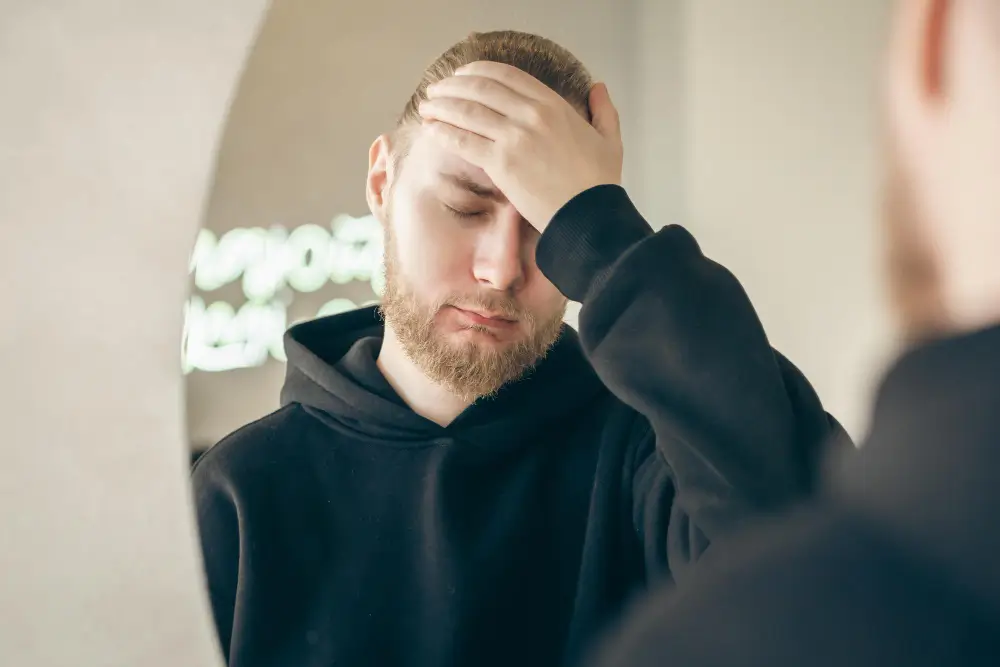
Insecurity in romantic dynamics is often treated like an abstract emotional concept, but its daily impact is intensely practical. It shapes how a man communicates, how he handles disagreements, whether he can remain emotionally present, and whether a relationship can survive long-term stress. While occasional self-doubt is a universal human reality, the way it manifests in men is heavily conditioned by expectations of unbroken strength, total control, and emotional restraint.
Because men are rarely encouraged to express vulnerability openly, insecurity usually shows up through indirect behavioral defenses. Instead of saying “I feel uncertain about our future,” an insecure man often turns to micromanagement, sudden coldness, or subtle jealousy.
To see how these hidden mechanisms operate in everyday partnerships, reading through how male insecurity affects romantic relationships and emotional intimacy helps clarify the boundary between natural vulnerability and chronic, damaging habits.
The underlying psychology of male insecurity in relationships
Male insecurity rarely looks like quiet shyness or obvious submissiveness. In most cases, it works beneath the surface. It surfaces as over-monitoring, sudden emotional distance, intense possessiveness, or a constant hunger for external praise. Paradoxically, this anxiety often spikes precisely when a relationship becomes deeper and more meaningful, because genuine emotional investment raises the perceived stakes of loss.
Insecurity is not a permanent character flaw or a synonym for weakness. It is an automatic defense mechanism against internal fears of inadequacy, comparison, or abandonment. Some men hide this panic behind an aloof, hyper-independent exterior, while others attempt to establish rigid control over their partner’s social life. In both situations, the tension is not caused by the partner’s actions, but by the man’s unmanaged internal turmoil.
It is equally important to distinguish temporary setbacks from chronic patterns.
- Temporary insecurity often follows real-world shocks like job loss, financial setbacks, or family crises, and it resolves as stability returns.
- Chronic insecurity operates as a repetitive script, creating the exact same friction across multiple relationships regardless of circumstances.
- Mature masculinity is never the total absence of self-doubt, but the conscious ability to regulate that doubt without making it a partner’s burden.
- True emotional security allows a man to lead with calm presence rather than relying on defensive posturing.
How internal self-doubt erodes intimacy and emotional safety
The most destructive impact of insecurity is felt in everyday intimacy. When a man is constantly on guard against perceived competition or abandonment, true closeness becomes terrifying. Instead of letting his guard down to build mutual trust, an insecure partner treats vulnerability as a dangerous weakness.
This anxiety creates a painful paradox. In an attempt to soothe his internal worry, an insecure man might try to control his partner’s schedule, wardrobe, or friendships. Yet that constant surveillance suffocates the very affection he wants to protect. Love requires emotional breathing room, and when a relationship is turned into an interrogation room, trust breaks down under the weight of imagined threats.
I evaluate emotional health by looking at how a man reacts to everyday situations.
- When his partner achieves career or personal success, a grounded man celebrates with genuine pride, whereas an insecure man perceives her growth as a threat to his authority.
- During an evening apart, a secure man enjoys his own hobbies or rest, while an anxious man interprets a slow text reply as fading attraction.
- When minor friction arises, a steady man listens calmly and focuses on solving the practical issue, whereas an insecure partner takes feedback as an attack and retreats into stony silence.
- In daily communication, healthy confidence relies on unforced consistency, while insecurity fluctuates between needy over-texting and cold withdrawal.
Subtle signs of insecurity to look for during early dating
During the opening weeks of dating, deep-seated insecurity rarely reveals itself openly. Instead, it frequently hides behind the mask of intense passion, protective chivalry, or romantic urgency. However, when that intensity is rushed and completely disconnected from the actual timeline of the connection, it points to internal anxiety rather than genuine love.
Recognizing these early warning signs protects both individuals from entering an unhealthy, codependent dynamic.
- Reactive, irrational jealousy that questions harmless conversations, old friendships, or casual social interactions.
- An exhausting, ongoing loop of validation-seeking that demands constant verbal reassurance about his looks, status, or ranking compared to past partners.
- Hyper-fixation on messaging habits, where tiny shifts in response time or punctuation trigger passive-aggressive remarks or panic.
- Push-pull emotional cycles, where moments of genuine vulnerability are followed immediately by cold irritability to re-establish emotional distance.
This balance of emotional steadiness and unforced leadership is especially critical when connecting through a trustworthy international dating service for European singles, where women value traditional masculine reliability, emotional composure, and protective strength over anxious over-monitoring and petty control.
Recognizing hidden behavioral patterns before they become toxic
To understand whether insecurity is driving a relationship, you have to look past sweet promises and evaluate the underlying behavioral trajectory. A man governed by fear treats dating as an audition to survive rather than a partnership to nurture.
These defensive mechanisms usually show up in predictable ways.
- Control disguised as protective care, where intrusive questions about where she is going or who she is with are framed as romantic concern.
- Artificial passivity, where a man avoids expressing genuine preferences or initiating plans out of fear that a difference of opinion will trigger rejection.
- Manufacturing unnecessary loyalty tests to observe whether a partner will drop everything to prove her devotion.
- Blaming external circumstances or past betrayals instead of taking personal ownership of current emotional reactions.
Surveillance and control can never manufacture authentic loyalty. When a man learns to confront his inner doubts honestly, develop genuine self-worth, and communicate with steady clarity, he creates the emotional safety necessary for a deep, lifelong partnership.